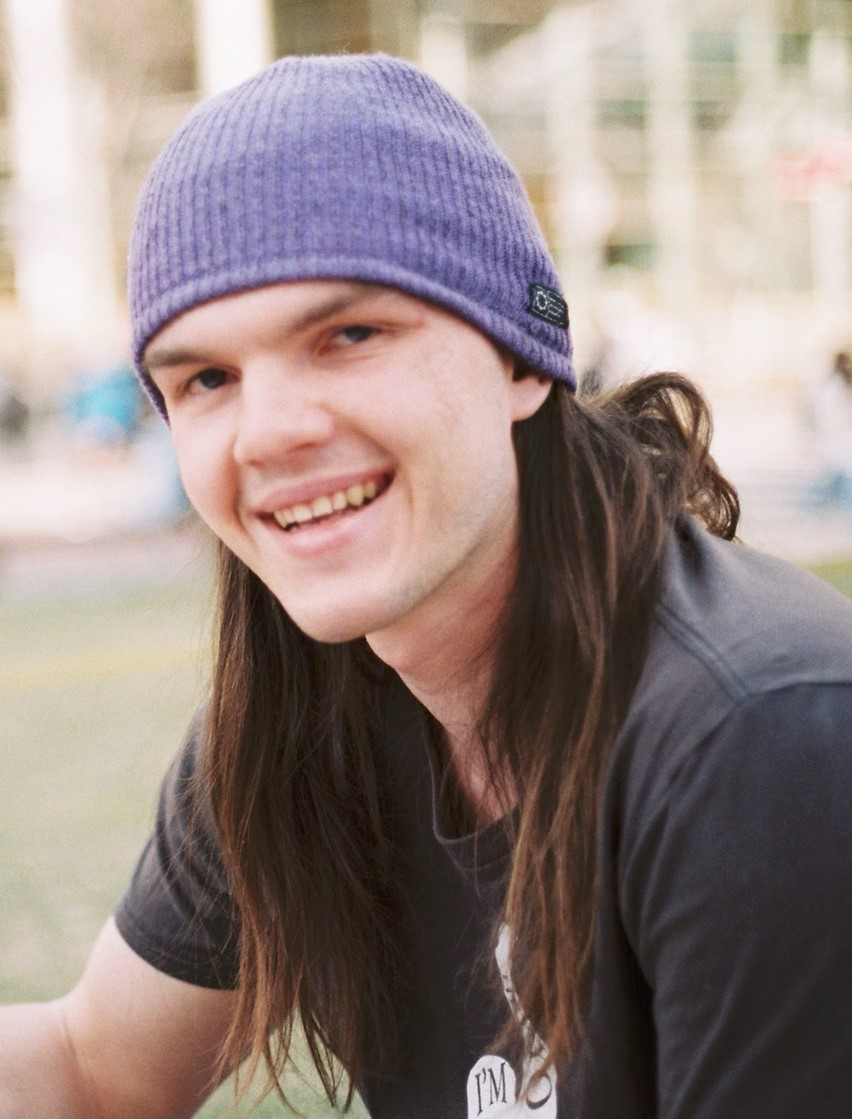
About Me
I earned my undergraduate and master’s degrees in Mathematics from Drexel University. My research interests are primarily in the field of applied mathematics. I am especially interested in questions related to biology and ecology. I specifically study mathematical models for the collective movement of populations, working with models that describe populations from the agent level to macroscopic densities, incorporating data from the field to calibrate parameters of principled models. When I am not spending my time working on research or teaching, I spend time traveling around rock climbing destinations, a hobby I have had and an industry I have spent time instructing in for more than 15 years.
Current Work
Spotted Lanternfly Modeling
The Spotted Lanternfly is an invasive pest in the northeast and has caused millions of dollars of damage. In close collaboration with the iEcoLab at Temple University, I have worked to develop mathematical models for the movement of spotted lanternfly, which bridge the gap between Spotted Lanternfly jumping between hosts and the macroscopic diffusive spread, which is often observed at the population level for invasive pests. SIAM published an article here on presentations given by me and my advisor, Benjamin Seibold, on the topic. I have also worked on numerical methods for the life cycle of invasive pests, with a focus on Spotted Lanternfly, working on moment methods for stage-based partial differential equations modeling said life cycles. This work is highly collaborative, utilizing diverse data sources from the ecology literature, principled modeling techniques and numerical methods for simulations, and allowing me to experience and gain some understanding of field work for the topic.
Bison Movement
Our goal in our bison modeling work is to use movement data to help design tools that support the long-term reintroduction efforts of the American Bison. I use GPS data and behavioral observations from field experts to build a random walk model consisting of a step-and-turn random walk with a geometric Ornstein–Uhlenbeck process in speed and Brownian motion in angle to model bison movement. We fit parameters in this movement process based on GPS movement data collected and segmented into behavioral states by collaborators working directly with the National Zoo at Montana State University. Our model framework ties behavior to data-informed parameters and energetic constraints, so that the emergent patterns of habitat use, grazing, and group formation can be compared directly to what is seen in reality and can be used to explore the consequences of different management choices. The goal of this project is to construct a model that is useful in simulating what-if scenarios of bison movement for much larger herds than exist currently in different enclosure geometries.
Navigating Swarms with Optimal Velocity Dynamics
This work focuses on adding the classical car following dynamics of the Optimal Velocity model, where drivers will relax their speed based on the gap in front of them, to classical attraction-repulsion alignment agent-based swarming models, then navigating these swarms through landscapes well preserving their emergent dynamics. In 1-dimension, the optimal velocity model can drive dynamic instabilities that can cause stop-and-go traffic waves in certain parameter regimes. I observed that when extending these dynamics to 2-dimensions, these dynamic instabilities in the steady flow of agents can still manifest, and for a small number of agents, one can analyze the stability of different arrangements of agents. I designed a controller capable of navigating these swarms of agents, that would only slightly perturb the emergent dynamics of the swarm, through a non-convex landscape of obstacles by solving a curvature-constrained Hamilton-Jacobi-Bellman equation numerically to find optimal routes for a low-dimensional approximation to the high-dimensional agent-based swarm.
Past Work
During my undergraduate degree I worked on exploring the dynamics of networks looking at Kuramoto with additive noise using the Euler-Maruyama time stepping scheme to simulate it numerically under the guidance of Gideon Simpson and Georgi Medvedev. This experience can be read about more here.
I also spent a 6-month Co-op at Drexel University, where I worked under the guidance of David Ambrose, studying the well-posedness and ill-posedness of 5th order linear equations, resulting in a paper.
Personal Projects and Activities
From a young age, I became an avid rock climber, spending time traveling rural America and abroad competing at a national and international level as well as climbing outside. Through these experiences, I gained a lot of perspective and had the opportunity to coach and mentor many young athletes teaching important technical skills required for the sport. I have since still played a role in the community, helping organize fundraising events and graffiti clean-up efforts with the former organization Haycock Bouldering Coalition, whose duties have been absorbed by EPAC.
Below is a collection of interesting photos from some more recent recreational excursions:
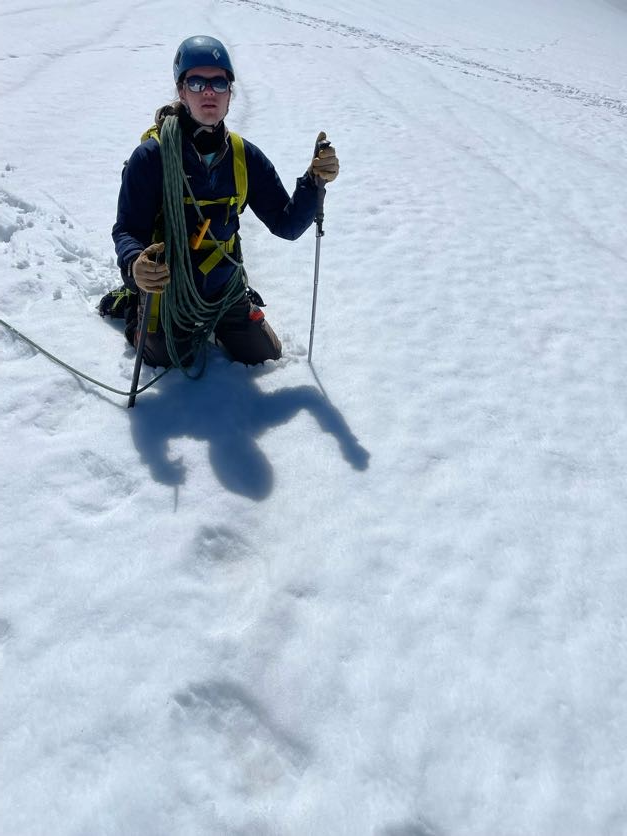
Crossing Bugaboo Glacier on the way to Pegion Spire in British Columbia, Canada.
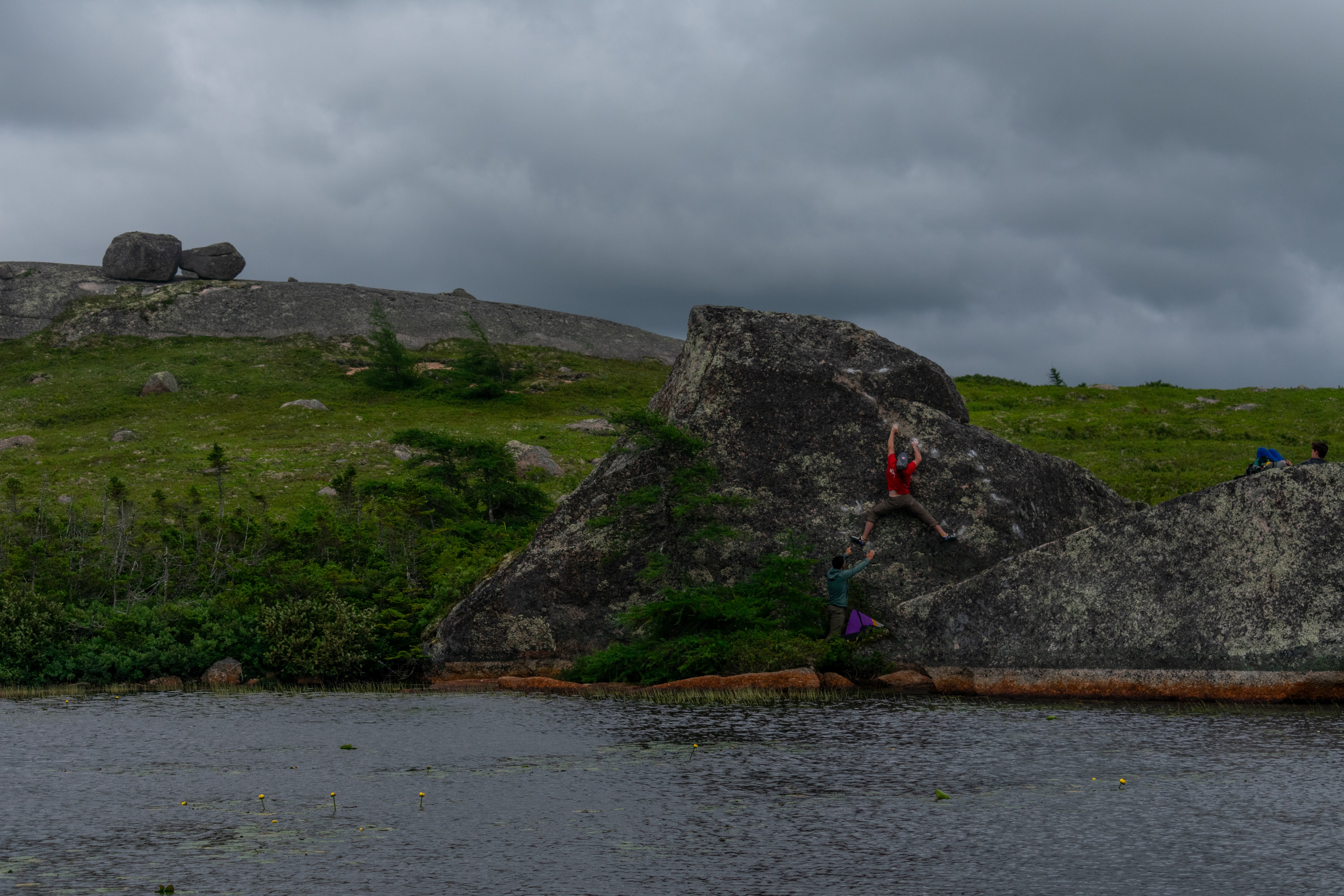
Climbing a new boulder in the bogs of Sandy Harbor on the Bruin Peninsula in Newfoundland, Canada.
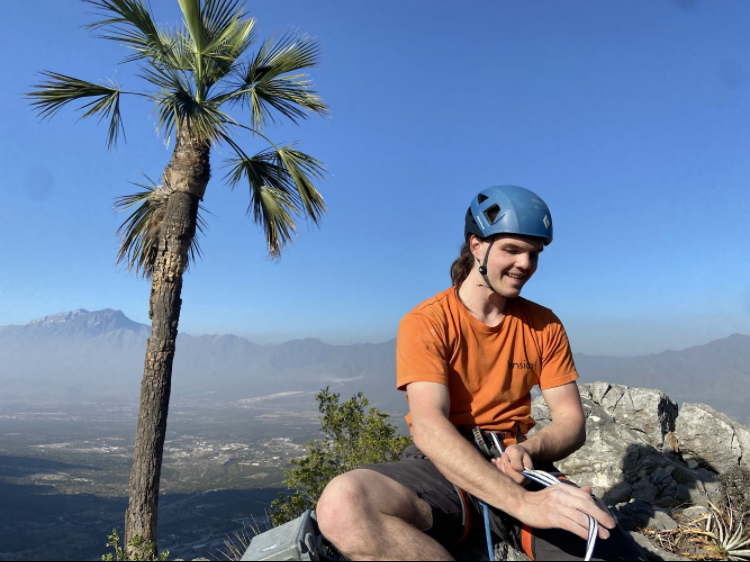
Sitting a top of one of the many 1000-foot-tall cliffs in El Potrero Chico, Nuevo Leon, Mexico.
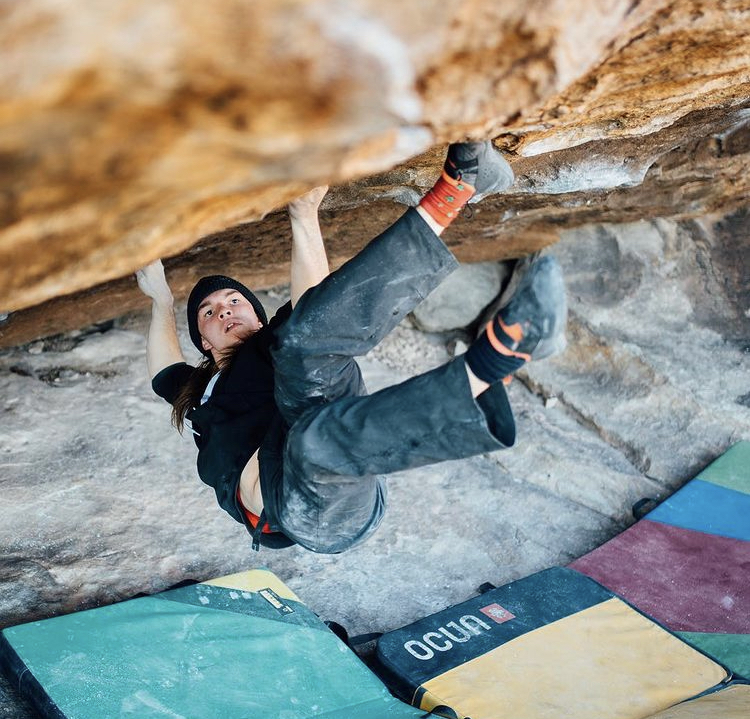
Climbing a roof in Hueco Tanks National Park, Texas.